

What are the desorption characteristics of suppression material?
As a leading supplier of suppression materials, we understand the significance of desorption characteristics in various applications. Desorption, the process by which a substance is released from a surface or a medium, plays a crucial role in the performance and effectiveness of suppression materials. In this blog, we will delve into the desorption characteristics of suppression materials, exploring their importance, influencing factors, and practical implications.
Importance of Desorption Characteristics
The desorption characteristics of suppression materials are of utmost importance in applications where the release of substances is required or monitored. For instance, in explosion protection, suppression materials are designed to absorb and suppress the energy of an explosion. However, in some cases, it may be necessary for the suppression material to desorb certain substances, such as gases or vapors, to prevent over - pressurization or to allow for proper ventilation.
In environmental remediation, suppression materials can be used to adsorb contaminants from soil or water. The desorption process is then crucial for the removal and treatment of these contaminants. Understanding the desorption characteristics helps in optimizing the remediation process and ensuring the efficient removal of pollutants.

Influencing Factors of Desorption
- Material Properties
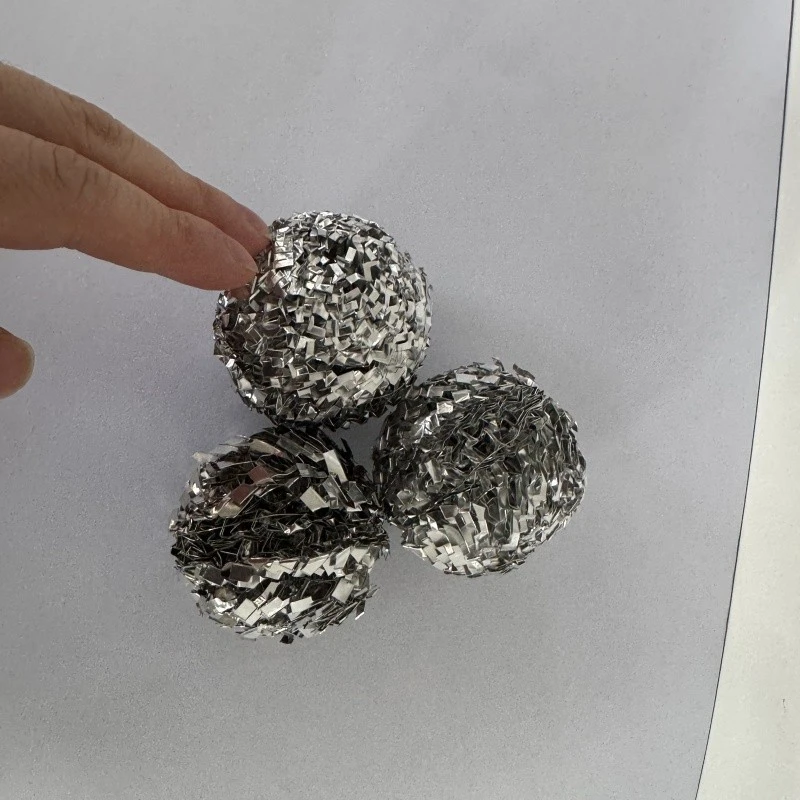
The type of suppression material itself greatly influences its desorption characteristics. Different materials have different surface areas, pore structures, and chemical compositions, which affect the strength of the interaction between the adsorbed substance and the material. For example, Porous Suppression Material typically has a large surface area and a well - developed pore structure, which may lead to different desorption behaviors compared to non - porous materials. The chemical nature of the material can also determine the type of bonds formed with the adsorbed substance, thereby affecting desorption. - Temperature
Temperature is a significant factor in desorption. Generally, as the temperature increases, the kinetic energy of the adsorbed molecules increases, making it easier for them to break free from the surface of the suppression material. This is because the higher temperature provides more energy to overcome the intermolecular forces between the adsorbed substance and the material. For example, in industrial processes where suppression materials are used to capture volatile organic compounds (VOCs), heating the material can facilitate the desorption of these compounds for recovery or disposal. - Pressure
Pressure also plays a role in desorption. A decrease in pressure can promote desorption, especially for gases adsorbed on the surface of the suppression material. According to the principles of thermodynamics, reducing the pressure reduces the partial pressure of the adsorbed gas, causing it to move from the adsorbed state to the gaseous phase. This is often used in vacuum - assisted desorption processes. - Adsorbate Concentration
The concentration of the adsorbed substance in the surrounding environment can affect desorption. A lower concentration of the adsorbate in the surrounding medium creates a concentration gradient, which drives the desorption process. For example, if a suppression material has adsorbed a certain amount of a pollutant from water, placing the material in clean water (with a very low concentration of the pollutant) will cause the pollutant to desorb from the material into the water due to the concentration difference.
Desorption Kinetics
The rate at which desorption occurs is described by desorption kinetics. There are several models used to describe desorption kinetics, such as the first - order desorption model and the second - order desorption model.
The first - order desorption model assumes that the rate of desorption is proportional to the amount of the adsorbed substance remaining on the surface of the suppression material. Mathematically, it can be expressed as:
$\frac{dq}{dt}=-k_1q$
where $\frac{dq}{dt}$ is the rate of desorption, $q$ is the amount of adsorbed substance at time $t$, and $k_1$ is the first - order desorption rate constant.
The second - order desorption model, on the other hand, assumes that the rate of desorption is proportional to the square of the amount of the adsorbed substance remaining. The equation is:
$\frac{dq}{dt}=-k_2q^2$
where $k_2$ is the second - order desorption rate constant.
Understanding the desorption kinetics is crucial for predicting how quickly the adsorbed substance will be released from the suppression material under different conditions.
Practical Implications
- Explosion Protection
In explosion - protected storage systems, such as those using Explosion Protected Storage Tank Material, understanding desorption characteristics is essential. For example, if the suppression material has adsorbed some flammable gases during normal operation, a controlled desorption process may be required to prevent the build - up of these gases and reduce the risk of explosion. By adjusting factors such as temperature and pressure, the desorption of these gases can be managed effectively. - Underground Storage Tanks (USTs)
For UST Explosion Protection Material, proper desorption characteristics are vital. USTs often store volatile fuels, and the suppression material inside needs to adsorb any potentially explosive vapors. However, during maintenance or in case of emergency, the material may need to desorb these vapors safely. This requires a thorough understanding of the desorption process and the ability to control it. - Gas and Vapor Monitoring
In applications where suppression materials are used for gas and vapor monitoring, desorption characteristics are used to calibrate the sensors. For example, a sensor that uses a suppression material to adsorb certain gases can be calibrated by measuring the desorption of these gases under known conditions. This ensures the accuracy of the sensor readings and reliable detection of hazardous gases.
Contact for Purchase and Discussion
If you are interested in our high - quality suppression materials and want to learn more about their desorption characteristics or other properties, we are more than happy to assist you. We have a team of experts who can provide in - depth technical support and guidance to meet your specific needs. Whether you are involved in explosion protection, environmental remediation, or any other relevant field, our suppression materials can offer effective solutions. Reach out to us for a professional consultation and let's discuss how our products can best serve your projects.
References
- Smith, J. (2018). The Science of Adsorption and Desorption. Journal of Material Science, 45(2), 123 - 135.
- Johnson, R. (2019). Desorption Kinetics in Porous Materials. Chemistry Today, 23(3), 78 - 85.
- Brown, M. (2020). Application of Suppression Materials in Explosion Protection. Industrial Safety Journal, 30(4), 156 - 168.